The Science-Design Intersection
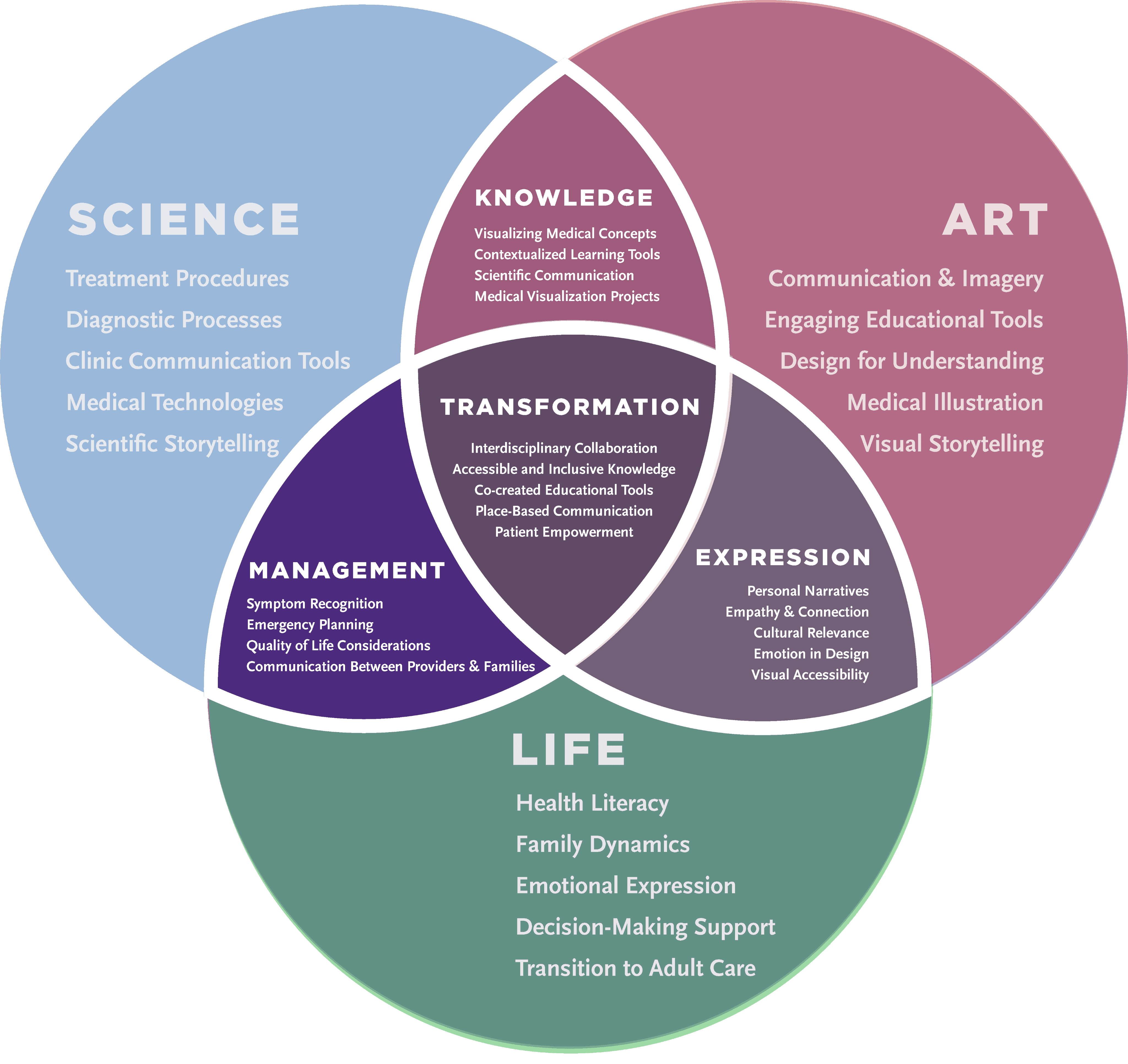
Where design meets medicine, information becomes more human. By blending creativity with clinical expertise, we make complex ideas clearer, more accessible, and more impactful.
Benefits of
Interdisciplinary Collaboration
Collaboration leads to better communication, smoother transitions, and more confident caregiving.
Shared Approaches
It’s not just about science or art — it’s where both meet life: the lived experiences of patients and caregivers.
Design
Helps communicate medical information in ways that are more intuitive, human, and accessible.
Allows medical information to be visualized in more accessible and emotionally resonant ways. It enhances understanding and builds confidence, not just in patients, but in families navigating complex systems.
Tools become more usable and relatable.
Families feel seen, understood, and supported.
Information is easier to comprehend
and remember.
Improved outcomes, because good design makes healthcare
more human.

01
02
03
04

Resources
Quick Links

This study has been approved by the University of Alberta Health
Research Ethics Board (Pro00142435).
Medicine
Provides grounding, ensuring the content is accurate, safe, and effective.
Allows medical information to be visualized in more accessible and emotionally resonant ways. It enhances understanding and builds confidence, not just in patients, but in families navigating complex systems.